
What is a private heart scan? A Consultant Cardiologist's guide
A private heart scan is imaging that looks directly at the structure and function of the heart and its arteries. The term covers several tests, including an echocardiogram, which uses ultrasound to show the chambers and valves, and cardiac CT scans, which show the coronary arteries and any calcium within them. Choosing the right scan depends on the question being asked, whether that concerns the heart muscle, the valves, the arteries or the rhythm.
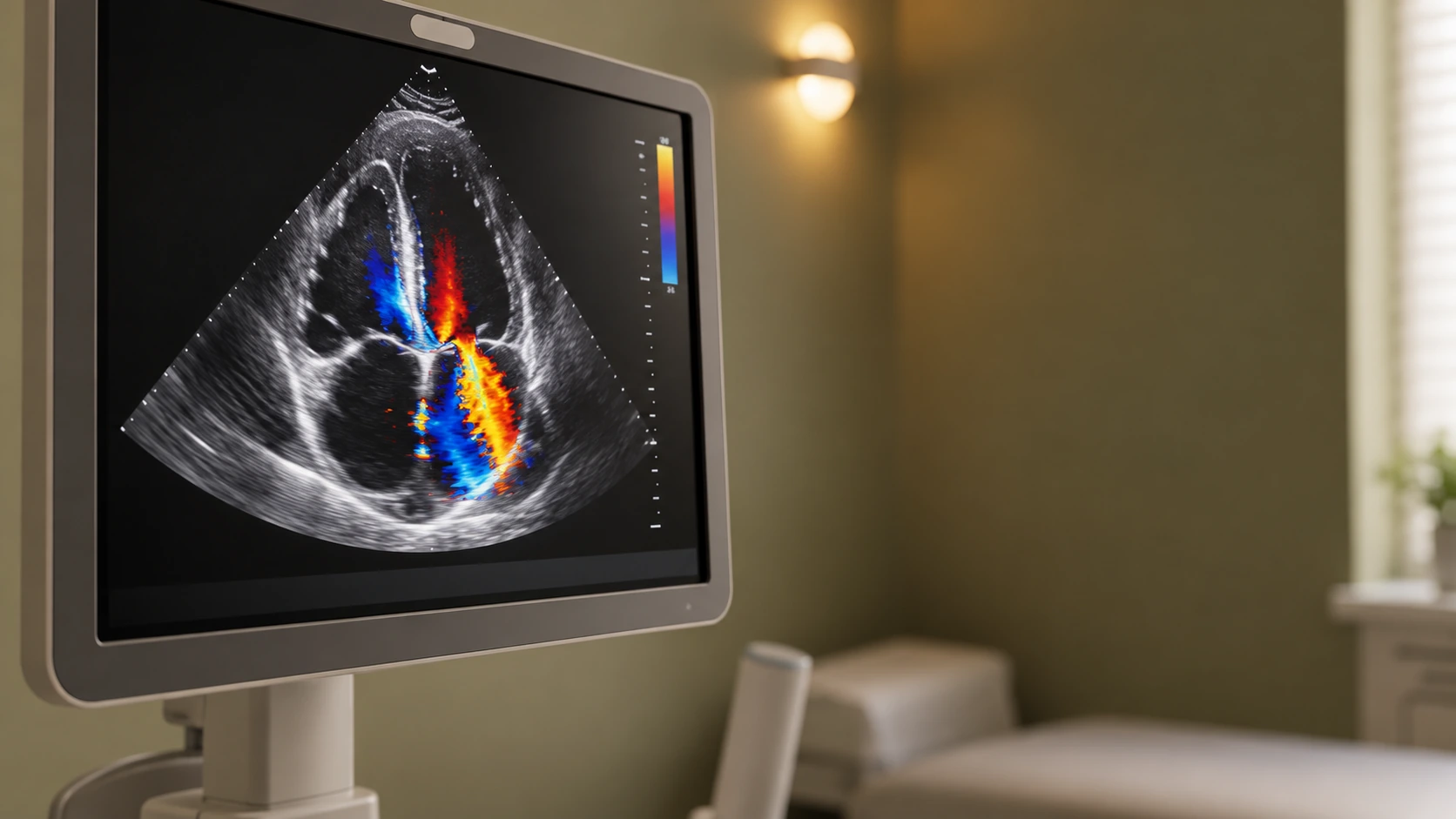
“Heart scan” is a broad term that covers several different imaging tests. In non-invasive cardiology, the most commonly used is an echocardiogram, an ultrasound examination of the heart. It uses sound waves rather than radiation, and produces moving images of the heart chambers, valves, the sac around the heart and the large vessels leaving it. The British Heart Foundation and the NHS both describe echocardiography as a safe, painless and widely used cardiac test.
Because the word scan covers many different tests, the most important step is matching the right imaging to your symptoms. An ultrasound scan answers questions about the heart muscle and valves, while a CT scan answers questions about the coronary arteries. Ordering the wrong test can leave a question unanswered, or expose a patient to imaging they did not need. At the Devonshire Street clinic in London, scans are performed and interpreted by Professor Michael Henein, a Professor of Cardiology with internationally recognised cardiac imaging expertise, drawn from tens of thousands of imaging cases. Rather than ordering a scan in isolation, he matches the imaging to your symptoms so that the result answers a clear clinical question.
Who needs a private heart scan?
A heart scan is often recommended for people with breathlessness, chest discomfort, palpitations or a murmur, for those with risk factors for coronary artery disease, and for anyone who wants a clear picture of how their heart is working. It is also used to monitor known conditions over time and to investigate an abnormal finding on another test. Patients from London, other UK cities and abroad.
What to expect on the day
1
2
The chosen scan is carried out, whether an ultrasound echocardiogram or a cardiac CT scan, subject to availability.
3
He reviews the images with you and explains what they show in plain language.
4
A written report follows shortly, shared with your GP where you wish.
Types of heart scan offered
The main options are a transthoracic echocardiogram for the heart muscle and valves, a coronary calcium score and CT coronary angiogram for the arteries, and specialised ultrasound such as carotid artery scan and a stress or transoesophageal echocardiogram where more detail is needed. The most suitable scan, or combination, is chosen with you, so that imaging is proportionate and purposeful.
Why choose Professor Henein for a private heart scan
Because a heart scan can mean many different tests, having a single expert who can perform and interpret each of them is a real advantage. Professor Henein is a Consultant Cardiologist and Professor of Cardiology whose clinical and imaging expertise is recognised internationally, having worked for fifteen years at Royal Brompton Hospital and published hundreds of scientific articles in the field of cardiology.
Because he manages the complete patient journey from diagnosis through treatment, your scan leads directly into a clear plan under the same expert care.
Common questions about a private heart scan
Which heart scan do I need?
It depends on the question. An ultrasound echocardiogram assesses the heart muscle and valves, while a cardiac CT scan assesses the coronary arteries.
Does a heart scan involve radiation?
An ultrasound scan uses no radiation. A cardiac CT scan uses a low dose. The right scan is matched to your symptoms.
How long does a heart scan take?
This varies by scan type, from around 15 minutes for a calcium score to about 30 minutes for an echocardiogram.
Will I get my results on the day?
Findings are usually discussed with you at the appointment, with a written report following shortly.
How do I know which scan I need?
Professor Henein confirms the most useful scan after discussing your symptoms and history, so that the imaging answers a clear question rather than being ordered in isolation.
Book a private heart scan
To arrange a private heart scan with Professor Michael Henein, contact the clinic at 16 Devonshire Street, London W1G 7AF, in the heart of the Harley Street medical district. Appointments are available to patients from London, other UK cities and abroad. To book, call +44 20 7228 8546 or email hayley.gibbs@hcaconsultant.co.uk, or use the booking button on this page to request an appointment. Professor Henein oversees each stage of your care, from your first appointment through any imaging, diagnosis and treatment, so your heart is looked after by one experienced consultant throughout.