
What is a coronary calcium score? A Consultant Cardiologist's guide
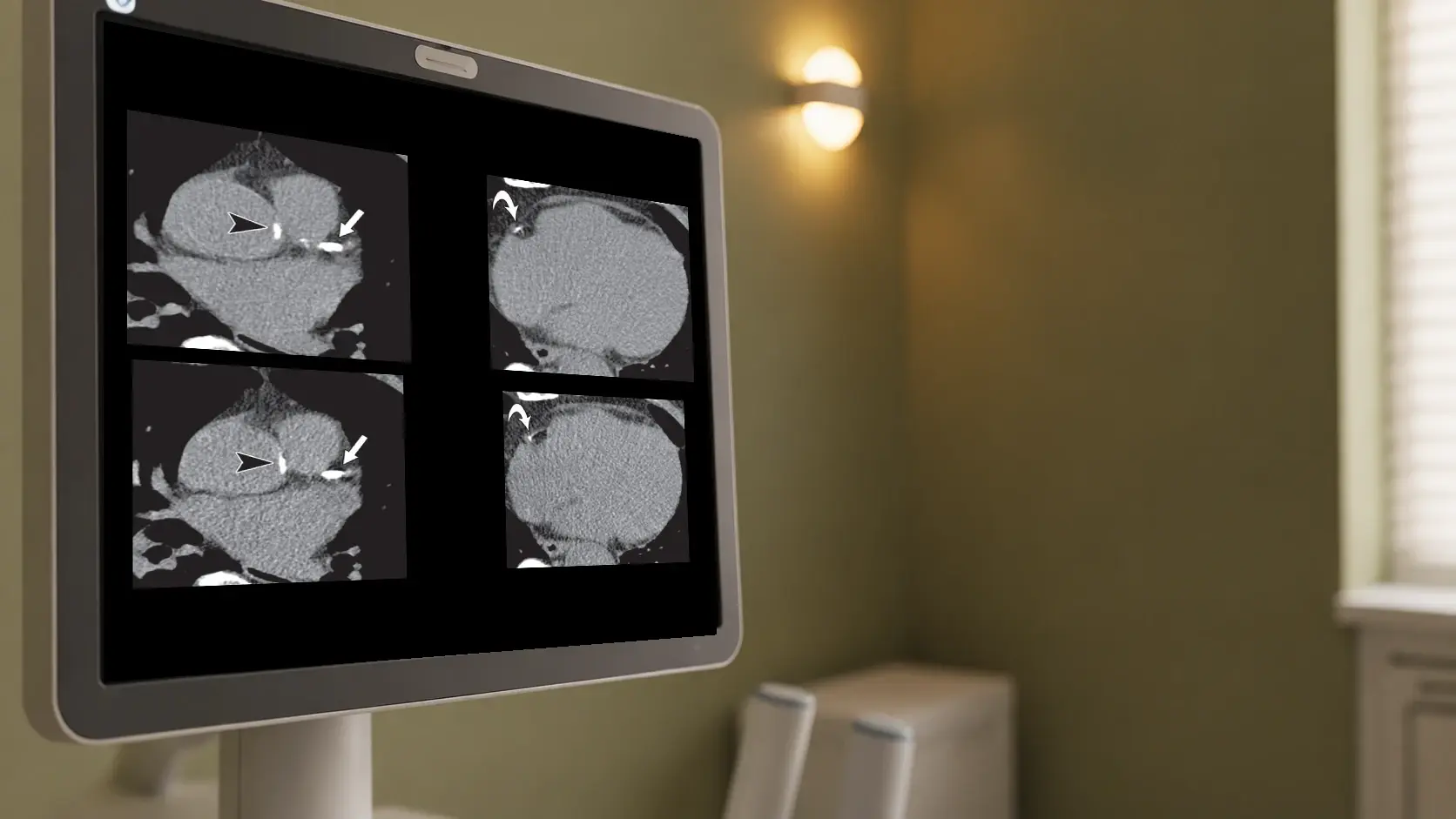
A coronary calcium score is a quick CT scan that measures the amount of calcified plaque in the walls of the coronary arteries. Calcium builds up where fatty deposits have hardened over time, so the score acts as a direct marker of how much disease has developed. The result is expressed as an Agatston score. A score of zero is reassuring, while a higher score signals a greater burden of coronary artery disease and a higher future risk.
The value of the test lies in its objectivity. Rather than estimating risk from averages, it shows what has actually accumulated in your own arteries, which often changes the picture for an individual. A calcium score can move someone from an uncertain position into a clear one, either providing genuine reassurance or prompting earlier, better-targeted treatment. The scan is fast, needs no injection and uses only a low dose of radiation. At the 16 Devonshire Street clinic in London, the scan is interpreted by Professor Michael Henein, a Professor of Cardiology with internationally recognised cardiac imaging expertise, who places the score alongside your wider risk profile rather than reporting it as an isolated number.
Who needs a coronary calcium score?
A calcium score is often helpful for people at intermediate risk, where the decision about starting preventive treatment is not clear cut, and for those with a family history of early heart disease who want an objective measure of their arteries. It can also help motivate and modifying lifestyle change, since a visible result is often more persuasive than a projected percentage. Patients from London, other UK cities and abroad.
What to expect on the day
1
Small electrodes are placed on your chest so the scan can be timed to your heartbeat.
2
You lie still on the scanner bed and hold your breath for a few seconds while images are taken.
3
The scan itself takes only a few minutes, with no injection required.
4
Professor Henein reviews your score with you and explains what it means for your treatment and lifestyle.
Types of assessment offered
A calcium score is frequently combined with a broader cardiovascular risk assessment, and where symptoms or a raised score suggest it, a CT coronary angiogram can be arranged to look at the artery lining and any narrowing in more detail. A score can also be repeated after an interval to track change over time. The right pathway is chosen with you, so that each additional test adds real value.
Why choose Professor Henein for a coronary calcium score
A calcium score is only as useful as the interpretation that follows it, since the same number can mean different things depending on age, symptoms and other risk factors. Professor Henein is a Consultant Cardiologist and Professor of Cardiology with internationally recognised cardiac imaging expertise and a substantial academic record in the field of coronary artery disease. He also published tens of paper in the field of coronary calcification, explaining the mechanisms behind its formation, clinical relevance and prognostic value.
Because he provides both the imaging and the clinical care, and manages the complete patient journey from diagnosis through treatment, your score leads straight into a personalised plan rather than a further referral.
Common questions about a coronary calcium score
What is a good coronary calcium score?
A score of zero is reassuring and suggests little or no calcified plaque, while a higher score indicates a greater burden of coronary artery disease and higher future risk. However a minority of patient might have zero calcium but yet significant plaque formation.
Does a calcium score involve an injection?
No. A coronary calcium score is a quick CT scan that needs no injection or contrast dye.
How much radiation is involved?
The scan uses only a low dose of radiation and takes just a few minutes.
Who should have a calcium score?
It is particularly useful for people at intermediate risk, or with a family history of early heart disease, where a clearer picture would guide treatment.
What happens if my score is raised?
A raised score is used alongside your wider risk profile to guide treatment. Depending on the result, Professor Henein may recommend lifestyle change, medication, a CT coronary angiogram or a stress echocardiogram to assess the impact of coronary calcification on heart muscle function.
Book a coronary calcium score
To arrange a coronary calcium score with Professor Michael Henein, contact the clinic at 16 Devonshire Street, London W1G 7AF, in the heart of the Harley Street medical district. Appointments are available to patients from London, other UK cities and abroad. To book, call +44 20 7228 8546 or email hayley.gibbs@hcaconsultant.co.uk, or use the booking button on this page to request an appointment. Professor Henein oversees each stage of your care, from your first appointment through any imaging, diagnosis and treatment, so your heart is looked after by one experienced consultant throughout.