
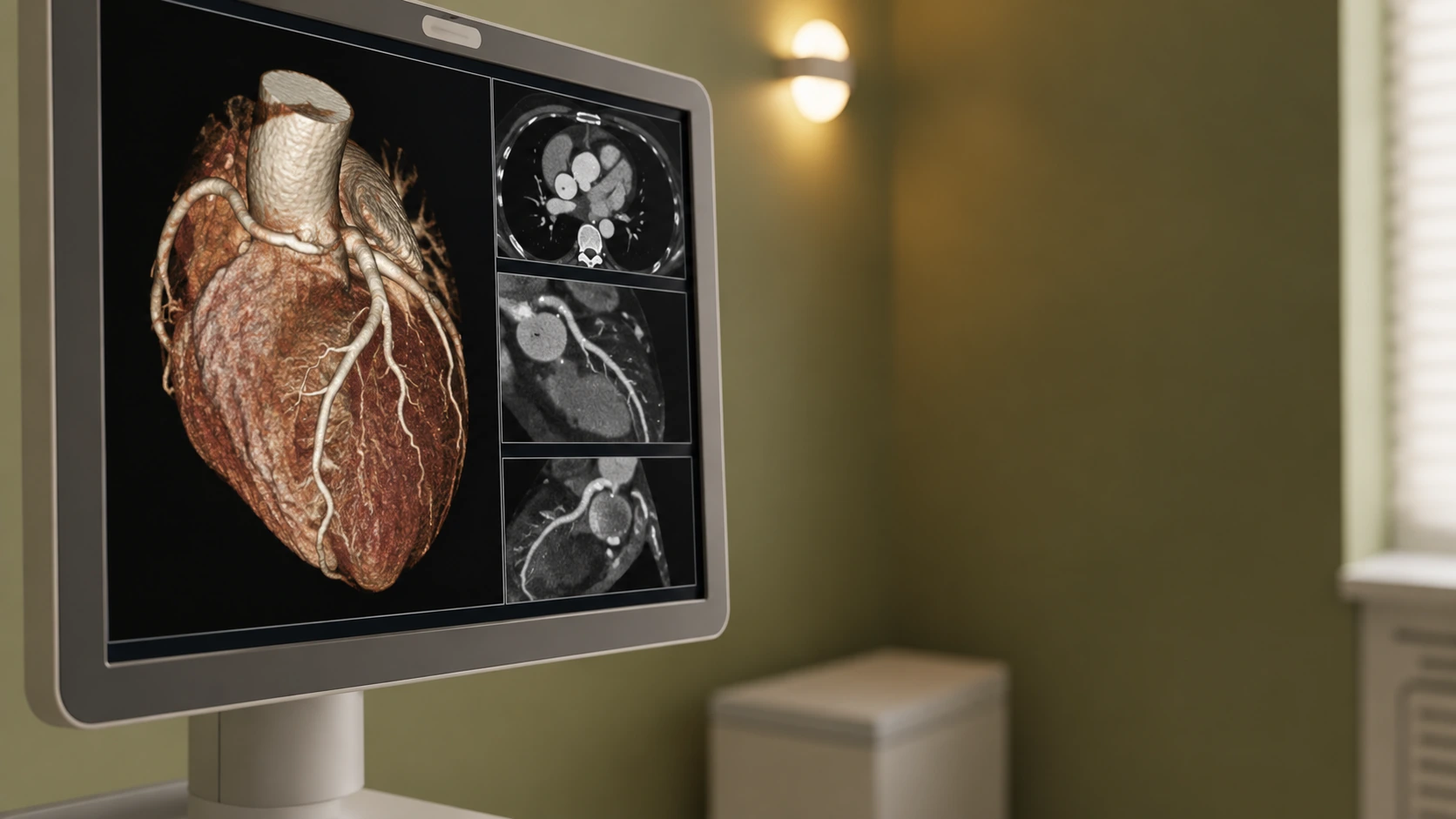
What is a CT coronary angiogram? A Consultant Cardiologist's guide
A CT coronary angiogram , often shortened to CTCA, is a detailed scan that shows the coronary arteries directly, without the tubes and wires used in a traditional invasive angiogram. A contrast dye is given through a small cannula in the arm, and the scanner captures the arteries as the dye passes through them. This reveals narrowing, soft plaque and calcified plaque, and helps establish whether chest symptoms are due to coronary artery disease.
For many patients a CTCA now answers the key question, is there significant disease in the coronary arteries, without the need for an invasive procedure. It shows not only whether an artery is narrowed but also the nature of the plaque within the wall, which helps guide treatment and prevention. At the Devonshire Street clinic in London, the study is interpreted by Professor Michael Henein, a Professor of Cardiology with internationally recognised cardiac imaging expertise built from tens of thousands of imaging cases. A CT coronary angiogram carries far more value when it is read by an experienced cardiologist who also understands your symptoms and history.
In the UK, NICE guidance recommends CT coronary angiography as a first-line investigation for many people presenting with stable chest pain that could be of cardiac origin. Your clinician will advise whether this applies in your case.
Who needs a CT coronary angiogram?
A CTCA is frequently recommended for people with chest pain or breathlessness where coronary artery disease is a possibility, for those with an abnormal or borderline calcium score, and for anyone whose risk profile warrants a clear look at the arteries. It is a valuable non-invasive alternative to invasive angiography for many patients, particularly earlier in the assessment of chest pain. Patients from London, other UK cities and abroad.
What to expect on the day
1
You are advised beforehand about caffeine and any medicines that may be needed to steady your heart rate for the clearest images.
2
A small cannula is placed in your arm so contrast dye can be given during the scan.
3
You lie still and hold your breath briefly while the scanner captures the arteries. The scan itself is quick.
4
Professor Henein reviews the images with you and explains the findings and any next steps.
Types of assessment offered
A CT coronary angiogram is often paired with a coronary calcium score, and where a significant narrowing is found, Professor Henein will discuss whether medication, lifestyle change or onward referral for further treatment is appropriate. Where symptoms suggest a functional problem, a stress echocardiogram may be added. The pathway is tailored to you, so that the scan informs a genuine plan rather than sitting as a report on its own.
Why choose Professor Henein for a CT coronary angiogram
Reading a CT coronary angiogram accurately requires both technical expertise and clinical judgement, since subtle findings must be weighed against the whole clinical picture. Professor Henein is a Consultant Cardiologist and Professor of Cardiology whose imaging expertise, for over 35 years, and extensive academic record are recognised internationally, Because he manages the complete patient journey, from imaging through diagnosis and treatment, your result flows directly into clear next steps under one expert.
Common questions about a CT coronary angiogram
How is a CT coronary angiogram different from an invasive angiogram?
A CT coronary angiogram images the arteries from outside the body using a scanner and contrast dye, avoiding the tubes and wires of an invasive procedure.
Does the scan involve a dye?
Yes. A contrast dye is given through a small cannula in the arm so the coronary arteries show up clearly.
How should I prepare?
You may be advised to avoid caffeine and, in some cases, to take medication that steadies the heart rate for the clearest images.
What can it detect?
It shows narrowing, soft plaque and calcified plaque in the coronary arteries, helping to establish whether chest symptoms come from the heart.
How soon will I have my results?
The images are reviewed with you at the appointment, and a written report follows shortly. Any narrowing found is explained clearly, along with the recommended next steps.
Book a CT coronary angiogram
To arrange a CT coronary angiogram with Professor Michael Henein, contact the clinic at 16 Devonshire Street, London W1G 7AF, in the heart of the Harley Street medical district. Appointments are available to patients from London, other UK cities and abroad. To book, call +44 20 7228 8546 or email hayley.gibbs@hcaconsultant.co.uk, or use the booking button on this page to request an appointment. Professor Henein oversees each stage of your care, from your first appointment through any imaging, diagnosis and treatment, so your heart is looked after by one experienced consultant throughout.